
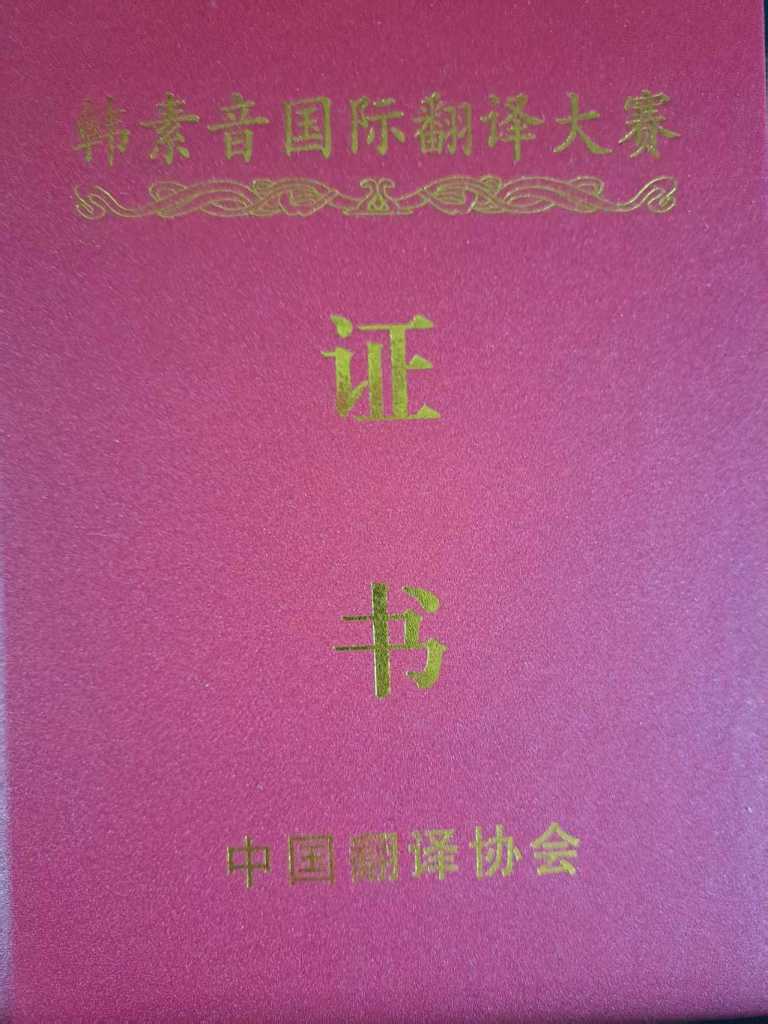

The 2022 Han Suyin International Translation Competition (韩素音国际翻译大赛) was my beginning in translation. I was encouraged to participate by a friend in China, and it was tough going at the time. Luckily, the competition took place over five months, and participants had simply to submit their translated text before the deadline.
I was enamored with researching and trying to find the best English mapping for the text. Smitten, really. With my poor level of ability at the time, it took around 40 hours to produce seven drafts for three pages of text. The writing mechanics of the piece were excellent, and it was interesting to translate. The topic was China’s ICH, or Intangible Cultural Heritage, and I learned many new things while translating. Perhaps this is what I like about translation. I get paid to learn, explore, discover, and leave my own meaningful mark.
As an aside, I do have a disdain for the UNESCO term “Intangible Cultural Heritage,” or at least how it’s used in China. It’s supposed to be used for intangible things, right? Things that cannot be touched, like, say, a method of dance or a system of language. But I can walk down a food street in China and see many vendors selling “ICH Fried Duck,” “ICH thousand-layer flatcakes,” “ICH dumplings,” etc. As people often remind me, it is the method of cooking that is intangible, not the foods themselves. However, I shake my curmudgeonly fist at that, yes I do. It’s overused and abused to the point that it’s becoming meaningless. Soon, a vendor selling ramen noodles on the street will call it ICH when he immerses them in boiling water, strains them, and adds the flavor packets. It’s laughable. Anyway, back to the translation competition.
So, I had a rough go of it, but I managed to win an Excellent Translation Award. About three percent of the 30,000+ submissions that year earned awards, and in the Chinese to English category, no one got first place, 10 got second place, 22 got third place, and 188 got the Excellent Translation Award. Needless to say, I was very happy with the result, because anyone participating in the competition had to be at least somewhat serious. The result showed me that I had a talent for translation, though I will admit it’s an advantage to be a native English speaker in the Chinese to English category. Perhaps more on that in another blog post. Still, there are not many native English speakers who know enough Chinese to do better.
Since 2022, I have participated each successive year, but have not managed to earn any more awards. We’ll see what 2025 brings! The submissions are due before June 1st, 2025.
P.S. For the C -> E category, I really wish they would let us add footnotes or, barring that, at least italicize words if we want to (there are many reasons to italicize in translations).
 NJS Translation